Blog · 9 min read
Vastu Shanti Puja: A Practical Vedic Guide for Home and Workplace
Reviewed by Acharya Krishnakant Shashtri · Updated 12 September 2026
What Vastu Shanti traditionally means, when families perform it, and how to combine sacred practice with sensible decisions about a property.
Quick answer
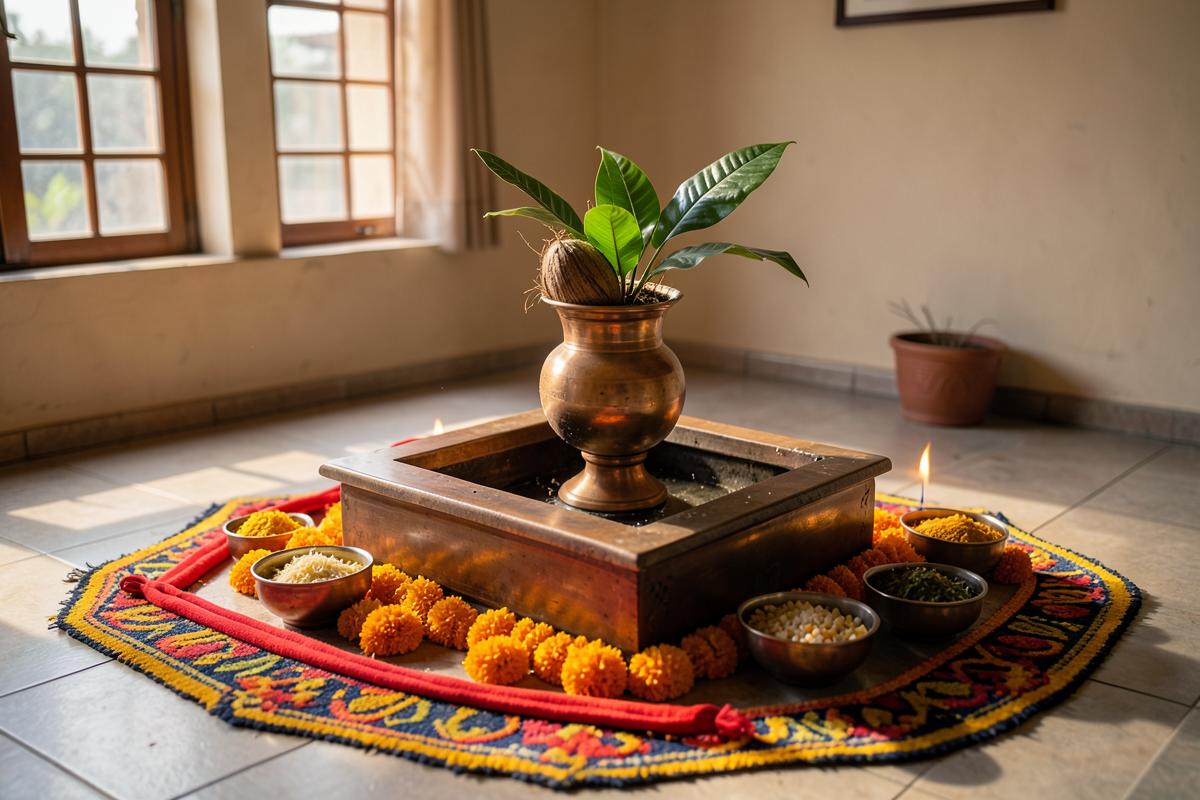
Vastu Shanti Puja is a Vedic rite for acknowledging the land, dwelling, Vastu Purusha and directional deities before a family enters or renews a space. The usual sequence is purification, Ganesh puja, Kalash sthapana, Vastu Mandal pujan, Navagraha worship, havan and aarti. It supports a prayerful beginning but does not replace safe construction, ventilation, repairs or professional property advice.
What Vastu means in the traditional view
Vastu Shastra considers how a built space relates to direction, sunlight, movement, function and the people using it. Its spiritual language speaks of Vastu Purusha and the guardians of the directions; its practical observations encourage orderly entrances, usable rooms, clean water and balanced light.
A Vastu concern should never be used to frighten a family. One unusual corner or room placement does not prove that every difficulty comes from the house. The whole layout, its actual use and the family's circumstances matter more than a checklist copied from the internet.
When families traditionally perform Vastu Shanti
The most common occasion is griha pravesh, when a newly built or newly purchased home is occupied. The rite is also appropriate after substantial renovation, before opening an office or shop, or when a property has remained unused for a long time.
- ◆Before entering a new home or workplace
- ◆After reconstruction or a major change to the layout
- ◆When reopening a long-vacant property
- ◆When a family wants to renew an existing household with a clear sankalp
The complete vidhi
The Acharya first confirms the sankalp, names and gotra of the family. The space is cleaned and the worship area prepared in a calm, well-ventilated place.
- ◆Punyahavachan and purification of the worship area
- ◆Ganesh puja and Kalash sthapana
- ◆Vastu Mandal and directional deity worship
- ◆Navagraha puja for balance within the sankalp
- ◆Vastu havan, purnahuti, aarti and prasad
- ◆Traditional entry or first use of the space after completion
Preparation and samagri
Families are generally asked to keep the property clean, ensure that water and electricity are working, and reserve a safe place for the havan. The puja arrangement may include a kalash, coconut, mango leaves, grains, flowers, ghee and prescribed havan materials.
Exact requirements vary with the scale and whether griha pravesh is included. Dharmsetu confirms the list in advance so families arriving from Nashik, Mumbai or elsewhere do not need to guess.
Vastu remedies without fear
Traditional remedies can include changes in room use, better light and ventilation, disciplined cleanliness, prayer, dana and Vastu Shanti. They should not be presented as guaranteed cures for health, money or relationships.
Structural cracks, unsafe wiring, dampness and legal ownership questions require qualified professionals. Vedic worship can accompany practical correction; it should never be used to avoid it.
Planning from Trimbakeshwar and Nashik
The initial review can be completed on WhatsApp using a clear floor plan, directions and photographs. Where an on-site puja is appropriate, the date, travel and complete dakshina are agreed before confirmation. Families outside Maharashtra can also seek a consultation before deciding whether a local ceremony or a Trimbakeshwar sankalp is more suitable.
Key takeaways
- ◆Vastu Shanti is a rite of purification, gratitude and right beginning.
- ◆Not every perceived dosh requires reconstruction.
- ◆A specific muhurat should be selected for the family and property.
- ◆Puja complements practical property care; it does not replace it.
- ◆Personal home prayer remains valid and does not require an elaborate paid ritual.
Frequently asked questions
Related Dharmsetu anushthans
Rituals traditionally connected with Vastu Shanti Puja, performed at Trimbakeshwar.
Vastu Shanti Puja
A traditional purification and thanksgiving rite for the place that shelters you.
Read more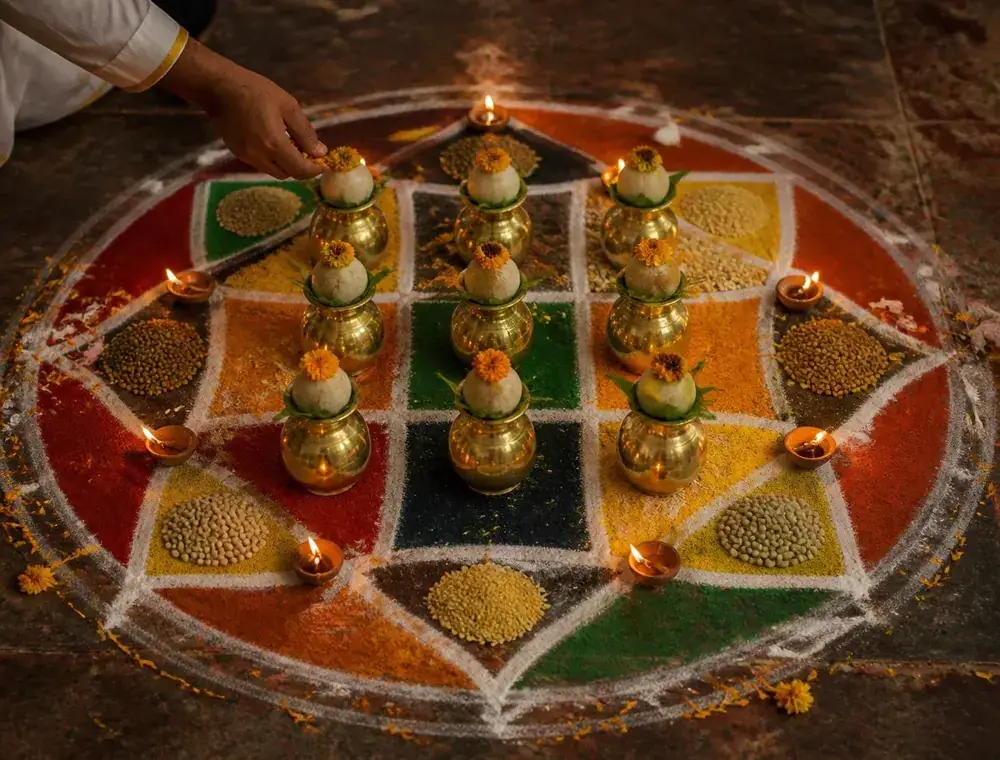
Navagraha Shanti Puja
Personalised graha shanti for the planets troubling your chart.
Read more
Rudrabhishek Puja
Abhishek of the Jyotirlinga with the Sri Rudram, the highest Shiva worship.
Read more