Blog · 10 min read
Rudra Abhishek at Trimbakeshwar: Vidhi, Types and Preparation
Reviewed by Acharya Krishnakant Shashtri · Updated 12 September 2026
What happens during Rudra Abhishek, how Laghu and Maha Rudra differ, and what devotees should prepare before visiting Trimbakeshwar.
Quick answer
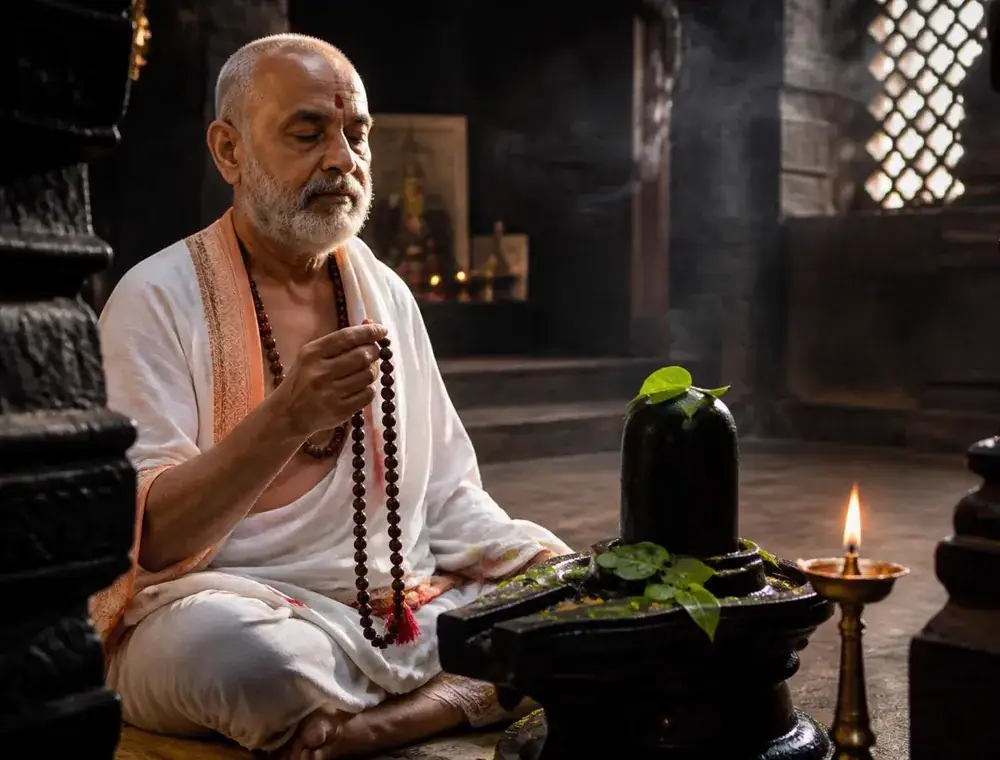
Rudra Abhishek is a formal Shiva worship in which the Shiva Linga is bathed with water and other prescribed offerings while Sri Rudram is chanted. At Trimbakeshwar the ceremony begins with a named sankalp, proceeds through Ganesh and Kalash puja, abhishek and Rudram recitation, and closes with aarti, prasad and, where included, havan.
Why Sri Rudram is central
Sri Rudram is a Vedic hymn addressed to Rudra and preserved in the Krishna Yajurveda. Its recitation acknowledges both the fierce and auspicious dimensions of Shiva and repeatedly asks that destructive force become protective grace.
Because Vedic accent and sequence matter, formal recitation is entrusted to trained pandits. Devotees at home may still offer water and chant Om Namah Shivaya without attempting a procedure they have not learned.
The step-by-step vidhi
Details vary with the chosen scale, but devotees should be able to understand the main stages before booking.
- ◆Purification, Ganesh smaran and sankalp in the yajman's name and gotra
- ◆Kalash sthapana and preliminary deity worship
- ◆Continuous abhishek with water and agreed panchamrit offerings
- ◆Sri Rudram and Chamakam recitation in the prescribed order
- ◆Bilva, flower and naivedya offerings
- ◆Aarti, prasad and concluding blessings
- ◆Havan and purnahuti where included in the sankalp
Laghu Rudra, Maha Rudra and Ati Rudra
These names indicate increasing recitation scale rather than different deities. Laghu Rudra is suitable for many family sankalps; Maha Rudra and Ati Rudra require substantially more reciters, time and coordination.
A larger format is not automatically more spiritually appropriate. The Acharya should explain the count, duration and cost and recommend only what suits the purpose.
Offerings and respectful use
Water remains the essential abhishek offering. Panchamrit may include milk, curd, ghee, honey and sugar, followed by clean water. Bilva leaves are traditionally offered to Shiva. Quantity should be proportionate, hygienic and aligned with local temple rules.
Online lists often add many substances without context. Do not carry materials to a temple without confirming what is permitted and who will arrange them.
Suitable days and muhurat
Monday, Pradosh, Shravan and Mahashivratri are widely preferred. Birthdays, anniversaries and the start of an important phase may also be marked with a sankalp on another valid day.
Festival access and temple procedures can change. Confirm the present panchang, reporting time and ritual location rather than relying on an old article's calendar.
Preparing for Trimbakeshwar
Share names, gotra and the purpose of the sankalp before arrival. Wear clean, modest clothing and arrive at the confirmed time. Families travelling from Nashik should allow for traffic, parking and festival queues.
Dakshina, samagri, the number of reciters and whether a recording is included are confirmed on WhatsApp before booking. Nothing should be added unexpectedly on the day.
What the tradition does and does not promise
Rudra Abhishek is traditionally undertaken for peace, protection, health, gratitude and spiritual steadiness. These are devotional intentions, not guarantees of a medical recovery, legal result or financial event.
The proper measure is whether the sankalp and vidhi were completed with care. Continue necessary treatment, professional advice and personal effort alongside prayer.
Key takeaways
- ◆Sri Rudram distinguishes formal Rudra Abhishek from a simple home abhishek.
- ◆The scale should match the sankalp, not status or pressure.
- ◆Confirm current temple rules and muhurat before travelling.
- ◆Remote sankalp is available when the family cannot attend.
- ◆No authentic ceremony guarantees a material outcome.
Frequently asked questions
Related Dharmsetu anushthans
Rituals traditionally connected with Rudra Abhishek Trimbakeshwar, performed at Trimbakeshwar.
Rudrabhishek Puja
Abhishek of the Jyotirlinga with the Sri Rudram, the highest Shiva worship.
Read more
Mahamrityunjaya Jaap
The mantra of conquering death, chanted for healing and protection.
Read more
Shiva Panchakshari Anushthan
Focused worship through the five sacred syllables of Om Namah Shivaya.
Read more