Blog · 10 min read
Pitrudosh Shanti at Trimbakeshwar: The Vidhi, Muhurat and Who Should Take the Sankalp
Reviewed by Acharya Krishnakant Shashtri · Updated 2 September 2026
Pitru Dosh is named often and understood rarely. Here is what the Pitrudosh Shanti vidhi at Trimbakeshwar actually involves, when it is performed, who may take the sankalp, and what the tradition does and does not claim.
Quick answer
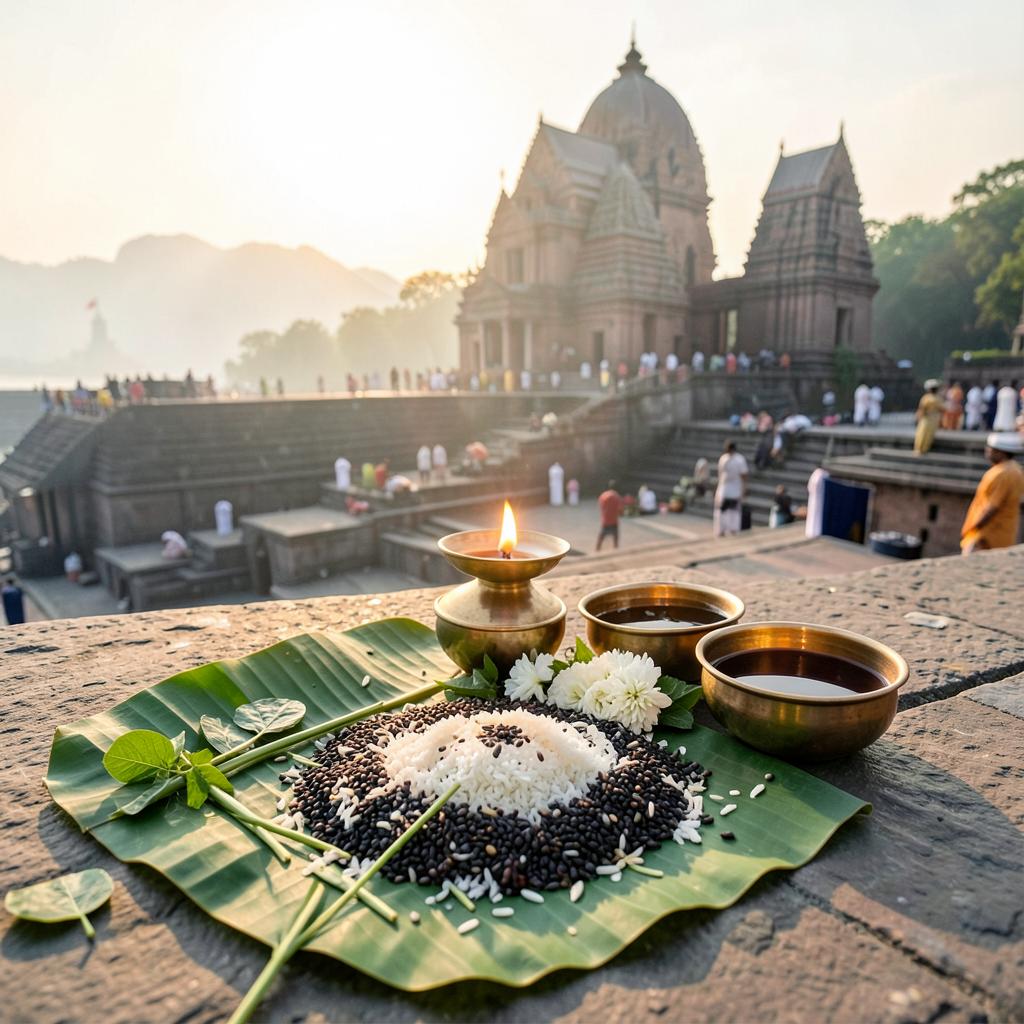
Pitrudosh Shanti is performed when ancestral rites have been left incomplete or when the ninth house, the Sun and the Rahu-Ketu axis in a kundli point to unsettled pitru karma. At Trimbakeshwar, about 28 km from Nashik city, the vidhi runs in one day: snan and sankalp at Kushavarta, tarpan on the Godavari, pind daan, Pitru Sukta and Rudra japa, havan, brahmin bhojan and dana. Pitru Paksha and Amavasya are the preferred muhurats, and the entire rite can be taken by proxy for families abroad.
What the classics mean by Pitru Dosh
Pitru Dosh is not a curse and it is not a diagnosis anyone should hand out casually. The classical texts describe it as rina — a debt. Three debts are named for every householder: to the rishis, to the devas and to the pitrus. The pitru rina is settled by shraddha, tarpan and pind daan performed at the right time and in the right place. When generations pass without those rites, or when they are performed carelessly, the tradition says the debt stays open.
In the chart, the same condition is read through the ninth house and its lord, through the Sun as the karaka of the father and the paternal line, and through Rahu or Ketu sitting on that axis. Saturn's involvement is read as delay rather than denial. None of these placements confirms Pitru Dosh on its own — they are read together with what the family actually did or did not perform.
Signs families usually describe
The pattern reported at Trimbakeshwar is remarkably consistent. It is rarely dramatic; it is a life that never quite opens.
- ◆Marriages that are repeatedly arranged and repeatedly fall through
- ◆Difficulty conceiving, or repeated loss, without a clear medical cause
- ◆Income that arrives but never accumulates into savings or property
- ◆The same illness recurring across two or three generations
- ◆Important work failing at the last step, again and again
- ◆Elders in the family appearing in dreams, silent or asking for something
Why Trimbakeshwar, and why it matters that it is near Nashik
Trimbakeshwar is the Jyotirlinga at the source of the Godavari, and the Kushavarta Teerth there is the kunda from which the river emerges. Ancestral rites offered on a river's source are held in the shastra to carry particular weight, which is why Narayan Nagbali, Tripindi Shraddha and Pitrudosh Shanti have been performed here for centuries rather than being distributed across many kshetras.
Practically, this is also the easiest of the great teerthas to reach. Nashik Road railway station and Nashik city are roughly an hour away by road, Mumbai is a four-hour drive, and Pune about five. Families flying into Mumbai or Nashik regularly complete the sankalp and return the same evening.
The Pitrudosh Shanti vidhi, step by step
The sequence is fixed. Nothing in it is improvised, and you should be able to see each stage happen.
- ◆Snan at Kushavarta Teerth and sankalp in the name, gotra and nakshatra of the yajman
- ◆Ganesh puja, Kalash sthapana, Punyahavachan and Matruka pujan
- ◆Pitru aavahan — the ancestors are formally invited by name where the names are known
- ◆Tarpan on the Godavari with til, jal and kusha for three generations of the paternal and maternal lines
- ◆Pind daan with the prescribed pindas, offered and then given to the river or to the cow
- ◆Pitru Sukta and Rudra japa, with the avartan count fixed by the chart
- ◆Havan with the prescribed samidha, purnahuti and Rudrabhishek of the Trimbakeshwar linga
- ◆Brahmin bhojan, vastra dana and anna dana, closing with the visarjan sankalp
Choosing the muhurat
Pitru Paksha — the fortnight before Navratri — is the traditional window, and the tithi matching the day of the ancestor's passing is preferred within it. Outside that fortnight, Amavasya of any month is valid, with Somvati Amavasya and Mahalaya Amavasya treated as especially auspicious.
A family that cannot travel on those days is not turned away. The Acharya checks the tithi, nakshatra and the yajman's running dasha and fixes a valid alternative. What matters in the shastra is that the sankalp is correct and the vidhi complete, not that the date is convenient.
Who may take the sankalp
The eldest son is the traditional adhikari, but the texts have always provided for families where he is absent. The younger son, the grandson, the daughter, the wife, a brother or the nearest surviving relative may take the sankalp, and Trimbakeshwar practice accepts this without argument.
What is needed is the gotra, the names of the departed where known, and the willingness to sit through the vidhi with attention. Where the gotra is unknown, the shastra prescribes Kashyap gotra as the default and the Acharya will guide you.
Dakshina, and what an honest quote looks like
Cost varies with the japa avartans prescribed, the samagri, and the number of brahmins seated for the anushthan. The complete amount is told on WhatsApp before the booking is confirmed, and it does not change on the day.
Treat two things as warning signs anywhere in Trimbakeshwar or Nashik: a fee that rises once you have arrived, and a promise of a specific outcome. The tradition promises a duty discharged, not a result delivered.
For families outside India
Devotees in the USA, UK, UAE, Canada, Australia and Singapore complete this rite every month without travelling. The sankalp is taken by proxy in the yajman's name, gotra and nakshatra, the family joins the vidhi over a live video link at a time adjusted for their zone, and the photo-video record and prasad are couriered afterwards.
Send the birth details and the names of the departed on WhatsApp, and the Acharya will confirm whether the anushthan is warranted before anything is scheduled.
What changes afterwards
The honest answer is that the shastra describes the effect as the settling of a debt, not the granting of a wish. Families most often report a quietness that was not there before — decisions that stop stalling, an obstruction that finally moves, sleep that returns. Some report nothing they can point to. Both are within the tradition.
What the vidhi does guarantee is that the duty owed to the pitrus has been performed correctly, in the place the shastra prescribes, and that it need not be carried into the next generation.
Frequently asked questions
Related Dharmsetu anushthans
Rituals traditionally connected with Pitrudosh Shanti Trimbakeshwar, performed at Trimbakeshwar.