Blog · 9 min read
Pitru Dosh: Signs, Causes and Traditional Remedies at Trimbakeshwar
Reviewed by Acharya Krishnakant Shashtri · Updated 4 August 2026
A calm, scripture-based explanation of Pitru Dosh — what the classics actually say, common misconceptions, and which remedies are traditionally prescribed.
Quick answer
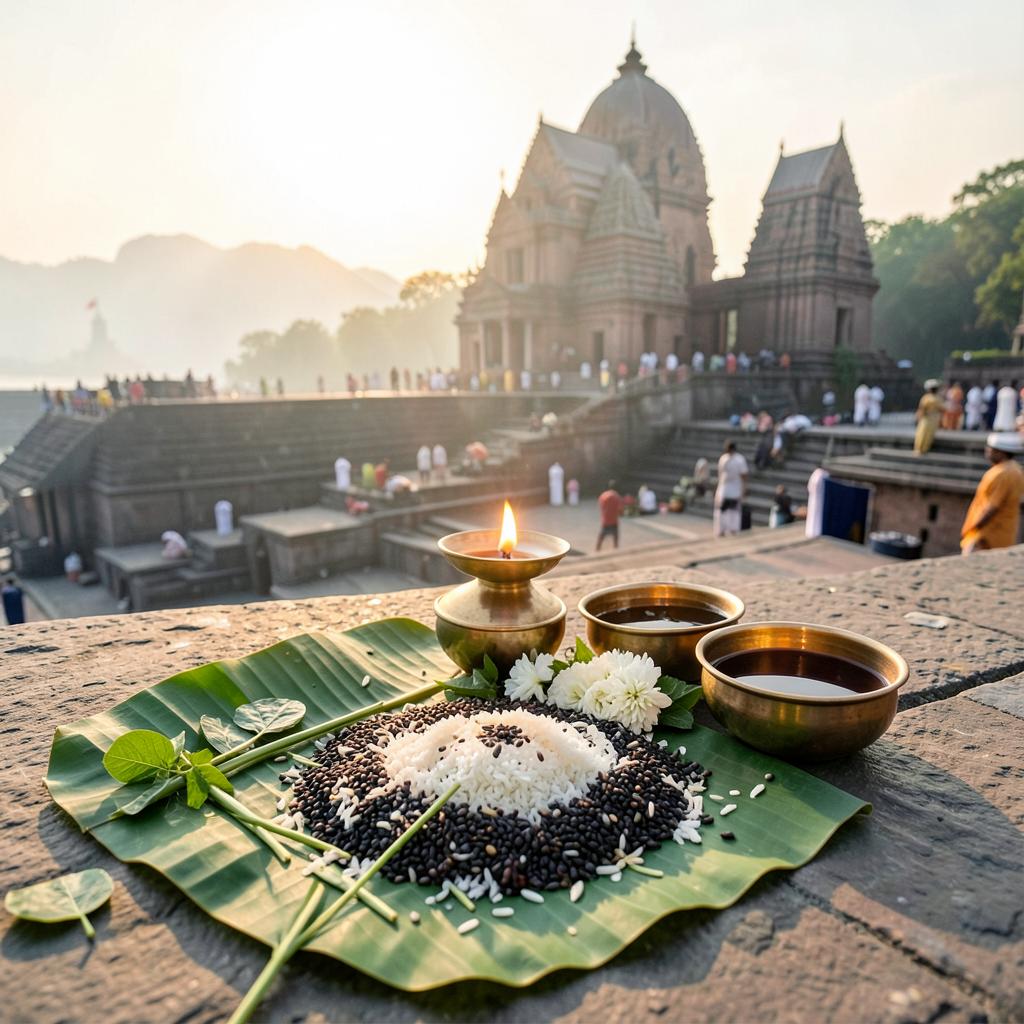
Pitru Dosh is a condition described in Vedic astrology in which ancestral duties are understood to be incomplete, often reflected in the 9th house, the Sun, or the Rahu–Ketu axis of a birth chart. Traditional remedies are Shraddha, Tarpan, Pind Daan, Tripindi Shraddha and, where prescribed, Narayan Nagbali — performed only after a qualified Acharya has reviewed the chart and the family's circumstances.
What is Pitru Dosh?
In the Vedic worldview, a family is not only the people who are alive. The pitrus — the departed of the paternal and maternal lines — remain part of the household's karmic account. When the rites owed to them are left incomplete, the classics describe this as pitru rin, an unpaid duty.
Pitru Dosh is the astrological expression of that idea. It is not a curse and it is not a verdict about a person's character. It is a reading of the chart that says: something in the ancestral line appears unsettled, and the shastra offers a defined way to attend to it.
Why it matters
Vedic tradition places shraddha among the nitya karmas — the duties expected of a householder, not optional acts. Attending to them is treated as a matter of gratitude and continuity, the way one would care for living elders.
For many families the value is also practical and emotional. Completing rites that a previous generation could not finish brings a sense of closure that no analysis can substitute.
The traditional Vedic perspective
Classical texts associate Pitru Dosh with the 9th house and its lord, with the Sun as the karaka of the father and the paternal line, and with the shadow planets Rahu and Ketu when they influence that axis. Saturn's involvement is read as delay rather than denial.
Importantly, the classics never treat a single placement as conclusive. The chart, the dasha in operation, and the family's actual history of completed rites are read together. This is why two people with a similar-looking chart may be advised very differently.
Common misconceptions
Much of what circulates online about Pitru Dosh is written to alarm rather than to inform. A few clarifications are worth stating plainly.
- ◆It is not a permanent curse on a bloodline.
- ◆It is not confirmed by one planet, one app reading, or one screenshot of a chart.
- ◆A costly ritual is not automatically a more correct ritual.
- ◆Rites are not a substitute for medical care, legal advice or financial planning.
- ◆No authentic Acharya promises a guaranteed outcome.
Signs traditionally associated with Pitru Dosh
Traditional practitioners look at patterns that repeat across a family rather than at one difficult year in one person's life. None of the following confirms Pitru Dosh on its own.
- ◆Ancestral rites known to be incomplete, forgotten or never performed
- ◆Repeated delays around marriage or childbirth across siblings
- ◆Recurring dreams of departed elders, especially near Amavasya
- ◆Long-running discord within the extended family
- ◆A pattern of effort that stalls at the final step, over many years
Causes described in the tradition
The causes named in classical practice are mostly about omission rather than wrongdoing.
- ◆Last rites or annual shraddha left unperformed for an ancestor
- ◆A death away from home where rites could not be completed
- ◆An unnatural or untimely death in the family line
- ◆Ancestors without descendants to perform their rites
- ◆Harm caused knowingly to sacred beings, described in the shastra as karmic debt
Traditional remedies — and why guidance comes first
Every remedy below is prescribed only after a qualified Acharya reviews the birth chart and the family's specific circumstances. Performing an elaborate ritual that your situation does not call for is neither useful nor traditional.
- ◆Shraddha and Tarpan — the core annual duty, especially during Pitru Paksha
- ◆Pind Daan — offerings made on behalf of named ancestors
- ◆Tripindi Shraddha — prescribed where rites have been missed for three generations
- ◆Narayan Nagbali — performed at Trimbakeshwar where the shastra indicates it
- ◆Regular dana and annadana in the name of the pitrus
How the rites are performed, step by step
The sequence below reflects standard practice at Trimbakeshwar. Timings vary with the ritual prescribed.
- ◆1. Kundli and family history are reviewed with the Acharya.
- ◆2. A suitable tithi and muhurat are selected — Amavasya and Pitru Paksha are traditional windows.
- ◆3. Sankalp is taken in the name and gotra of the yajman.
- ◆4. Kalash sthapana and the prescribed puja are performed.
- ◆5. Pind daan and tarpan are offered on the Godavari.
- ◆6. Havan, brahmin bhojan and dana conclude the anushthan.
Myth vs fact
Myth: Pitru Dosh means your ancestors are angry with you. Fact: the tradition frames it as a duty left incomplete, not as anger.
Myth: One ritual settles everything forever. Fact: shraddha is an annual duty; the tradition expects continuity, not a one-time transaction.
Myth: Only the eldest son can perform the rites. Fact: practice allows for other family members where the eldest son is unavailable; the Acharya advises what applies in your case.
Myth: Expensive means effective. Fact: correctness of vidhi and sincerity of sankalp are what the shastra emphasises.
What devotees traditionally report
Families most often describe a settled feeling — the sense that an obligation carried quietly for years has finally been attended to properly. Vedic tradition speaks of harmony in the household and steadiness in family matters. These are described as blessings, never as guaranteed outcomes.
Key takeaways
- ◆Pitru Dosh is a karmic reading, not a curse or a diagnosis.
- ◆It is assessed from the whole chart plus the family's history of rites.
- ◆Shraddha, tarpan and pind daan are the foundational remedies.
- ◆Tripindi Shraddha and Narayan Nagbali are prescribed selectively, not by default.
- ◆Always act on the guidance of a qualified Acharya, never on a generic online reading.
Conclusion
Pitru Dosh is best approached calmly. Understand what the tradition actually says, have your chart read honestly, and complete the rites the shastra prescribes for your situation — no more, and no less.
Looking for authentic Vedic guidance? Dharmsetu offers traditional Vedic astrology consultations and Puja Anushthans at Trimbakeshwar, performed according to scriptural traditions by experienced Acharyas. Contact Dharmsetu to understand which consultation or ritual may be appropriate for your situation.
Frequently asked questions
Related Dharmsetu anushthans
Rituals traditionally connected with Pitru Dosh, performed at Trimbakeshwar.